



Publications
Publications
Filter by
On the mechanism of creating pinched hysteresis loops using a commercial memristor device
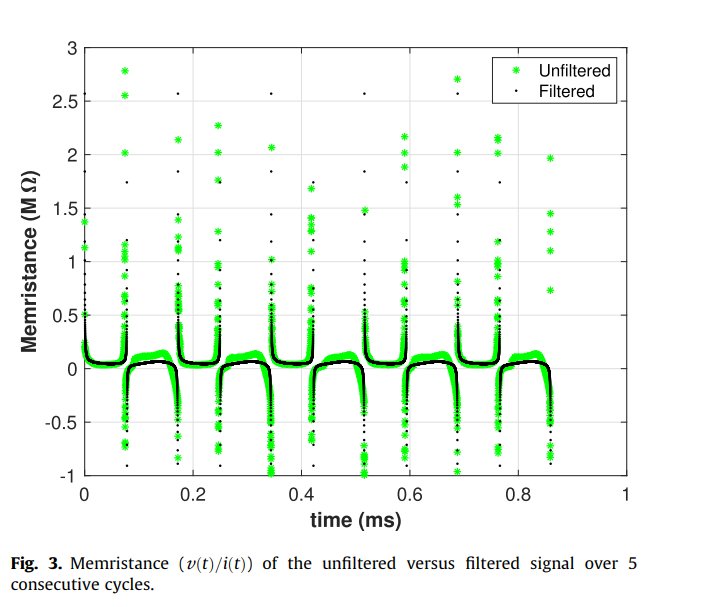
In this short communication we analyze the impact of signal harmonics on the formation of the pinched hysteresis loop using a commercial memristor device. We show that by using only the fundamental frequency and the second harmonic components, extracted from the measured electrical current signal, a distortion-less pinched hysteresis loop is re-created. This loop is then used to simulate memristor
Third-order tunable-phase asymmetric crosscoupled oscillator
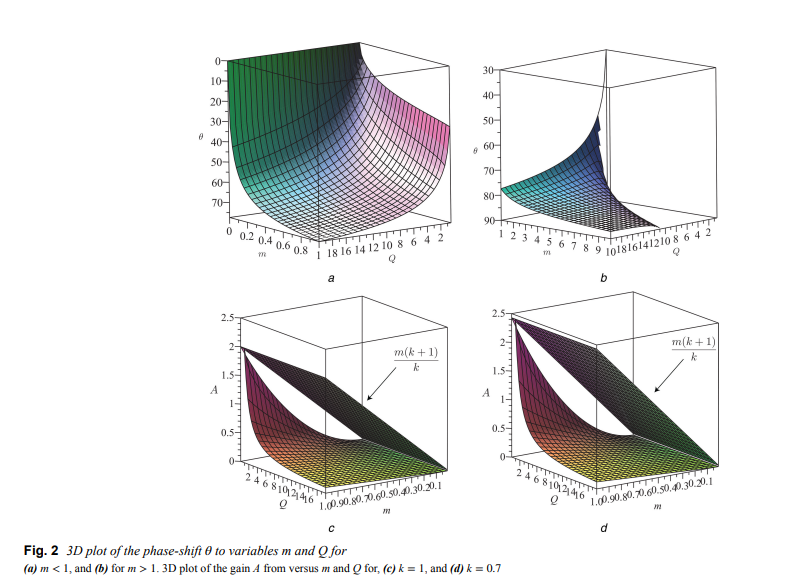
Here, the authors show that an asymmetric cross-coupled oscillator can be used to achieve independent-phase tunable outputs. In particular, a third-order cross-coupled oscillator, with non-balanced loads, is studied and expressions for its start-up condition, oscillation frequency, phase-shift between its two outputs as well as their amplitude ratio are derived. From these expressions, it is found
Single-Transistor Second-Order Allpass Filters
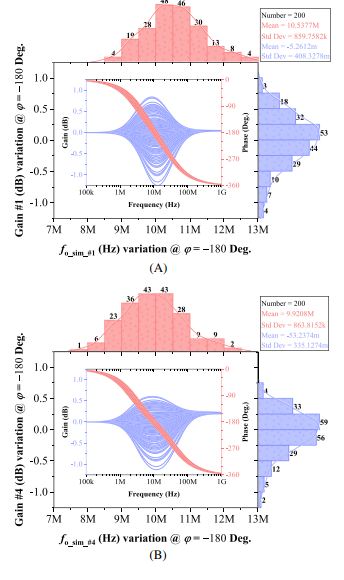
This paper presents two CMOS designs of a second-order voltage-mode allpass filters (APFs) for high-frequency applications. Each of the proposed filters is based only on a single transistor and four surrounding impedances. The first proposed allpass filter is an RL filter while the second proposed one is an RLC filter. A detailed analysis along with the parasitic effects is provided for each of
An Ultra-Low Power Wide-Band Single-Transistor Second-Order Allpass Filter in 65nm CMOS
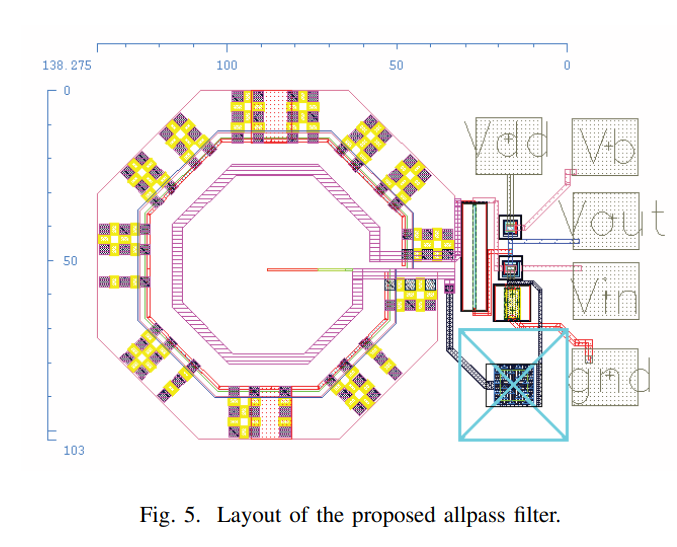
In this paper, we propose a MOS design of a second-order voltage-mode allpass filter to be used as a time delay cell. The proposed filter is based on a single transistor, three resistors and two energy storage elements and was designed in a 65nm CMOS technology. Post-layout simulations demonstrate a group delay of approximately 13ps across a 30GHz bandwidth, while only consuming 809.7μW from a 1-V
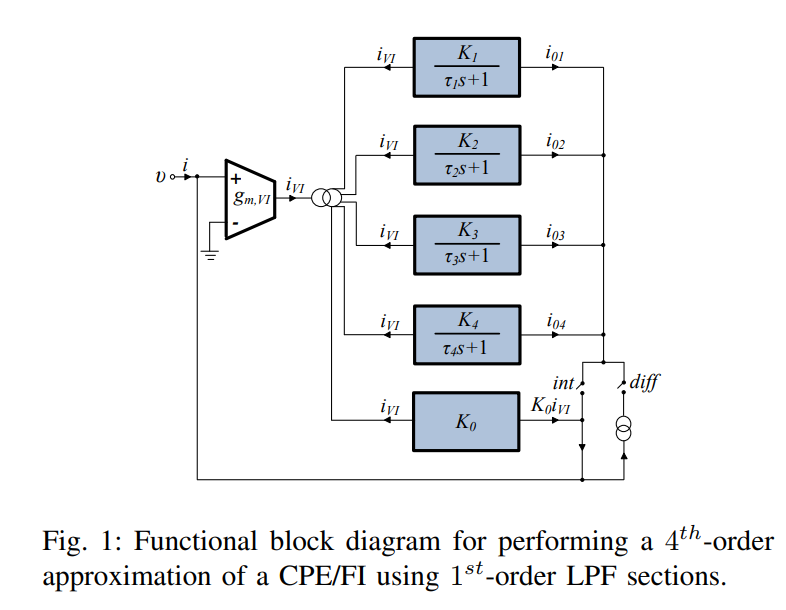
Log-domain implementation of fractional-order element emulators
Novel fractional-order capacitor and inductor em-ulators are presented in this work, which offer fully electronic tunability of their characteristics and, simultaneously, reduced circuit complexity compared to those already introduced in the literature. This has been achieved through the utilization of the log-domain filtering for implementing the approximation of the required fractional-order
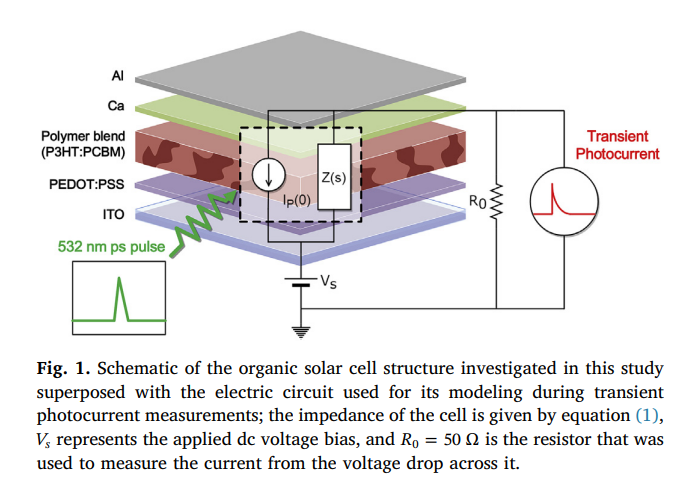
On the modeling of dispersive transient photocurrent response of organic solar cells
The current methods used for estimating the electrical parameters of organic solar cells (OSC) from time-domain measurements are based on integer-order impedance models. Meanwhile, in the frequency-domain, the adopted circuit models usually contain a constant phase element which is known to capture effectively the fractional-order dispersive behavior of these devices. Therefore, inconsistency
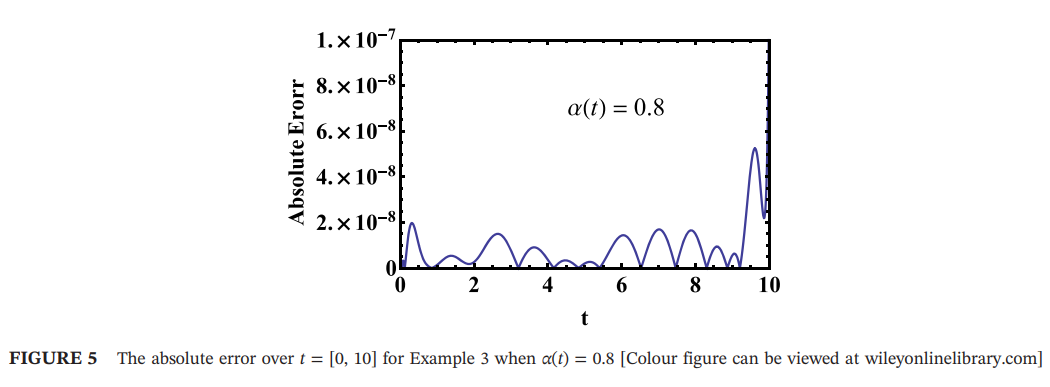
The minimax approach for a class of variable order fractional differential equation
This paper introduces an approximate solution for Liouville-Caputo variable order fractional differential equations with order 0
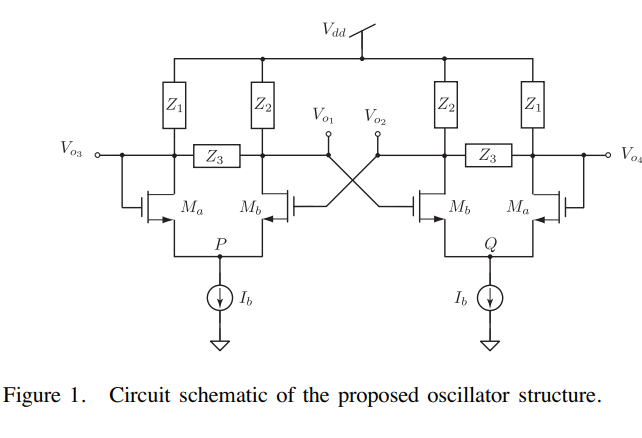
On a class of quadrature phase oscillators using differential pairs
A new class of quadrature phase oscillators based on cross-coupled differential pairs is introduced. This class contains eight possible circuits which produce four output voltages with phase differences of ±π or ±π/2, depending on the choice of output node, and does not require balanced differential-pair loads. Phase error analysis is provided along with experimental and simulation results using
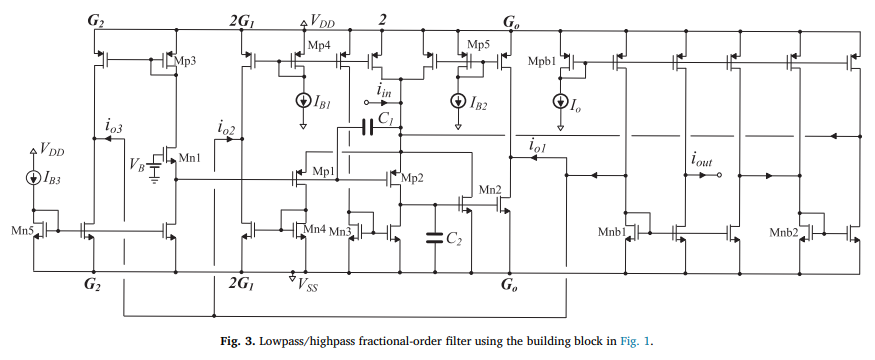
Design and application examples of CMOS fractional-order differentiators and integrators
Reduced complexity CMOS fractional-order differentiator and integrator building blocks are introduced in this work, based on 2 nd -order integer-order transfer function approximations. These blocks are then used for implementing fractional-order filters as well as a Leaky-Integrate-and-Fire Mihalas-Niebur neuron model. Cascading 1 st and 2 nd -order blocks to obtain 5 th -order integer-order
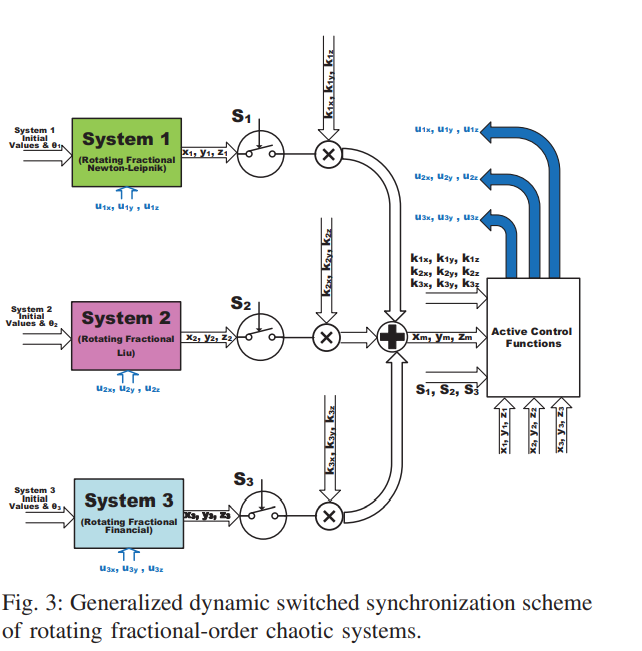
All-Dynamic Synchronization of Rotating Fractional-Order Chaotic Systems
This paper proposes generalized controllable strange attractors through dynamic rotation of fractional-order chaotic systems. Dynamic rotation angle enables the generation of multi-scroll and multi-wing attractors from single and double-scroll ones. The rotating systems are integrated with a generalized dynamic switched synchronization scheme. Dynamic control switches determine whether each system