



Publications
Publications
Filter by
Control and synchronization of fractional-order chaotic systems
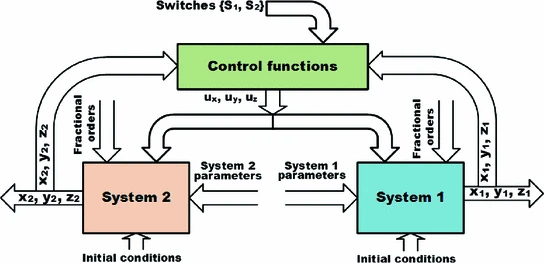
The chaotic dynamics of fractional-order systems and their applications in secure communication have gained the attention of many recent researches. Fractional-order systems provide extra degrees of freedom and control capability with integer-order differential equations as special cases. Synchronization is a necessary function in any communication system and is rather hard to be achieved for
Control and synchronization of fractional-order chaotic systems
The chaotic dynamics of fractional-order systems and their applications in secure communication have gained the attention of many recent researches. Fractional-order systems provide extra degrees of freedom and control capability with integer-order differential equations as special cases. Synchronization is a necessary function in any communication system and is rather hard to be achieved for
Fractional-order DISPR model for the AIDS epidemiological dynamics
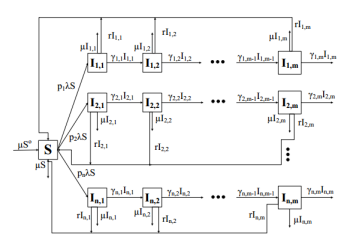
Modeling epidemiological dynamics of AIDS infection is an indispensable method to track the spread of such fatal disease. In this paper, the Differential Infectivity and Staged Progression Model, DISP, is modified to include the possibility of recovery, hence the new proposed model is called the DISPR model. The DISPR model is also generalized to the fractional order domain to allow more
A three-dimensional no-equilibrium chaotic system: Analysis, synchronization and its fractional order form
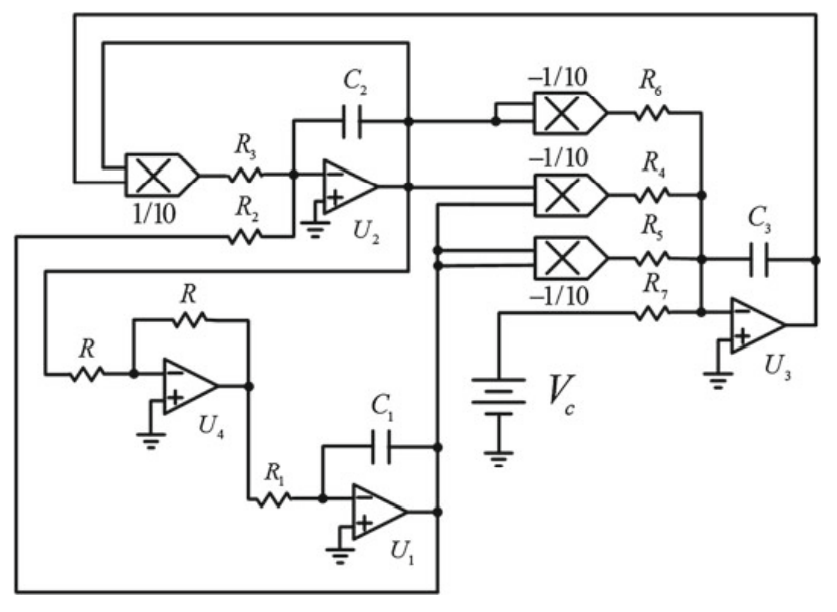
Recently, a new classification of nonlinear dynamics has been introduced by Leonov and Kuznetsov, in which two kinds of attractors are concentrated, i.e. self-excited and hidden ones. Self-excited attractor has a basin of attraction excited from unstable equilibria. So, from that point of view, most known systems, like Lorenz’s system, Rössler’s system, Chen’s system, or Sprott’s system, belong to
A three-dimensional no-equilibrium chaotic system: Analysis, synchronization and its fractional order form
Recently, a new classification of nonlinear dynamics has been introduced by Leonov and Kuznetsov, in which two kinds of attractors are concentrated, i.e. self-excited and hidden ones. Self-excited attractor has a basin of attraction excited from unstable equilibria. So, from that point of view, most known systems, like Lorenz's system, Rössler's system, Chen's system, or Sprott's system, belong to
Biological inspired optimization algorithms for cole-impedance parameters identification
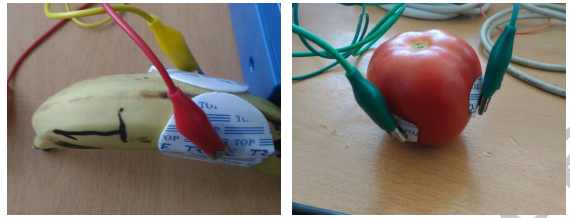
This paper introduces new meta-heuristic optimization algorithms for extracting the parameters of the Cole-impedance model. It is one of the most important models providing best fitting with the measured data. The proposed algorithms inspired by nature are known as Flower Pollination Algorithm (FPA) and Moth-Flame Optimizer (MFO). The algorithms are tested over sets of both simulated and
Fractional order four-phase oscillator based on double integrator topology
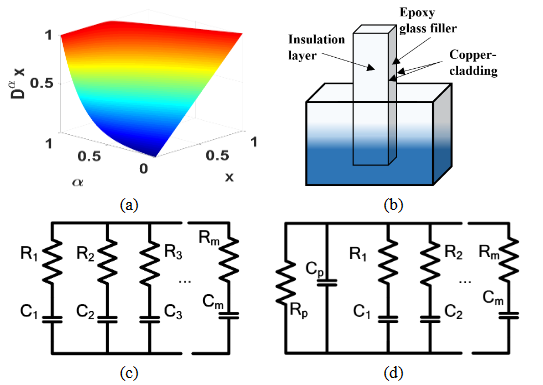
This paper presents a generalization of Soliman's four-phase oscillator into the fractional-order domain. The extra degrees of freedom provided by the fractional-order parameters α and β add more flexibility to the design of the circuit. The design procedure and equations of the proposed oscillator are presented and verified using Matlab and PSPICE. Also, the stability analysis for fractional
FPGA realization of Caputo and Grünwald-Letnikov operators
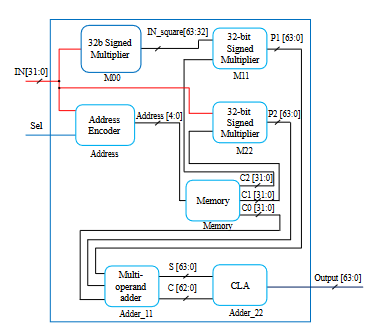
This paper proposes a hardware platform implementation on FPGA for two fractional-order derivative operators. The Grünwald-Letnikov and Caputo definitions are realized for different fractional orders. The realization is based on non-uniform segmentation algorithm with a variable lookup table. A generic implementation for Grünwald-Letnikov is proposed and a 32 bit Fixed Point Booth multiplier radix
Fractional inverse generalized chaos synchronization between different dimensional systems
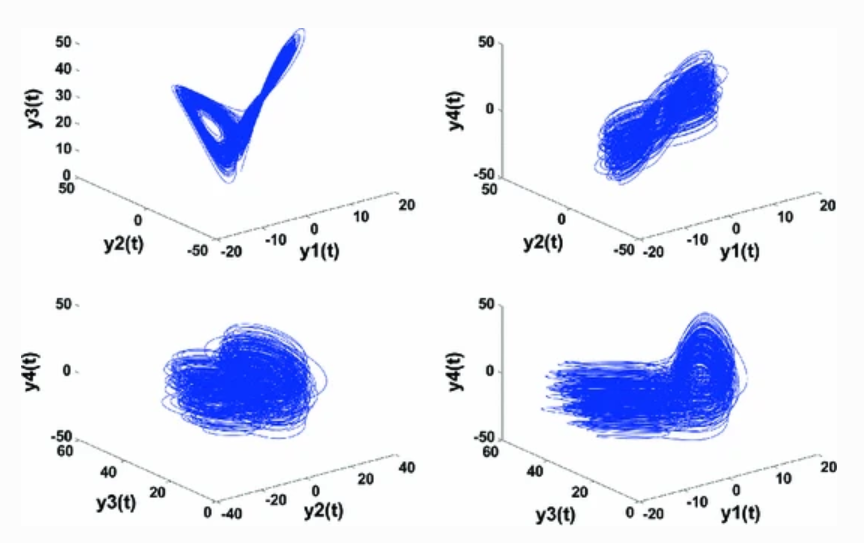
In this chapter, new control schemes to achieve inverse generalized synchronization (IGS) between fractional order chaotic (hyperchaotic) systems with different dimensions are presented. Specifically, given a fractional master system with dimension n and a fractional slave system with dimension m, the proposed approach enables each master system state to be synchronized with a functional
Fractional inverse generalized chaos synchronization between different dimensional systems
In this chapter, new control schemes to achieve inverse generalized synchronization (IGS) between fractional order chaotic (hyperchaotic) systems with different dimensions are presented. Specifically, given a fractional master system with dimension n and a fractional slave system with dimension m, the proposed approach enables each master system state to be synchronized with a functional